What Happens Inside the Testicles When You Have a Varicocele?
Wiki Article
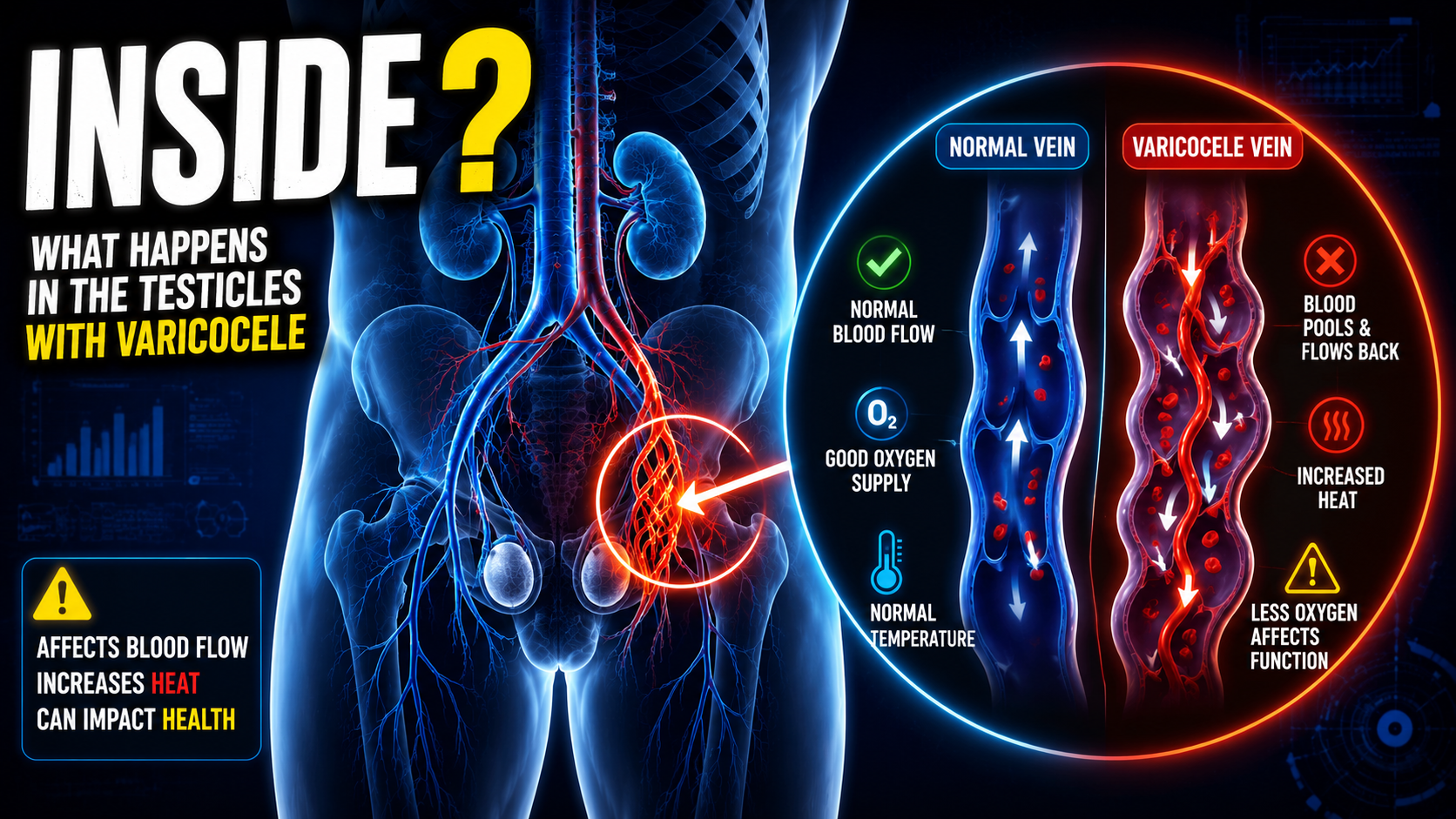
A varicocele affects the testicles by disrupting the normal flow of blood through the veins that drain them. When the valves inside these veins stop working properly, blood flows backward and collects around the testicle instead of returning efficiently to the heart. This increases pressure and raises the temperature around the testicle, creating an environment that may interfere with sperm production and normal testicular function over time. While many people never develop complications, understanding these internal changes helps explain why some varicoceles require treatment.
Although a varicocele often develops gradually and may not cause immediate symptoms, the underlying changes inside the testicle can begin long before noticeable discomfort appears. Learning about varicocele helps patients understand why doctors sometimes recommend monitoring or treatment even when symptoms are mild.
How Does a Healthy Testicle Normally Function?
The testicles produce:
Sperm cells
Testosterone
To function properly, they require:
Healthy blood circulation
Efficient blood drainage
A temperature slightly lower than normal body temperature
This carefully balanced environment supports normal reproductive function.
What Happens When a Varicocele Develops?
A varicocele develops when the valves inside the testicular veins become weak or fail.
As a result:
Blood flows backward.
Blood pools inside enlarged veins.
Venous pressure increases.
Veins become enlarged and twisted.
According to the European Association of Urology (EAU), varicoceles are associated with impaired venous drainage around the testicle.
Why Does the Temperature Around the Testicle Increase?
One of the important changes caused by a varicocele is reduced cooling of the testicle.
Normally:
Fresh blood circulates efficiently.
Excess heat is carried away through the veins.
With a varicocele:
Blood remains around the testicle longer.
Heat is not removed as effectively.
Local temperature may rise.
This increase in temperature is one reason doctors believe a varicocele may affect sperm production in some individuals.
How Can Blood Flow Changes Affect Testicular Function?
Poor venous drainage may place additional stress on the testicular tissue.
Over time, this may contribute to:
Reduced oxygen delivery efficiency
Increased venous pressure
Changes in the environment needed for sperm production
Not every person experiences functional changes, but prolonged venous congestion may affect testicular health in some cases.
Can a Varicocele Affect Fertility?
Yes, in some individuals.
A varicocele has been associated with:
Lower sperm count
Reduced sperm movement
Changes in sperm quality
However, many men with a varicocele have normal fertility and never experience reproductive problems.
Doctors evaluate fertility concerns individually rather than assuming every varicocele will affect reproductive health.
Can the Testicle Change in Size?
Sometimes.
A long-standing varicocele may be associated with:
Slower testicular growth during adolescence
Mild shrinkage of the affected testicle in some individuals
These changes do not occur in everyone but are one reason doctors recommend regular follow-up when necessary.
How Do Doctors Evaluate These Internal Changes?
Doctors usually begin with:
Medical history
Physical examination
A Scrotal Doppler Ultrasound is commonly used to assess:
Enlarged veins
Blood flow
Venous reflux
Testicular size
Overall scrotal anatomy
Ultrasound provides valuable information for determining whether the varicocele is affecting the testicle.
Can Treatment Restore Healthier Blood Flow?
Treatment aims to stop the abnormal backward flow of blood.
Common options include:
Varicocele Embolization
Microsurgical varicocelectomy
During Varicocele Embolization, an interventional radiologist uses a small catheter to block the abnormal veins with tiny coils or embolic agents. Blood is then redirected through healthy veins, reducing pressure around the testicle while avoiding open surgery.
Treatment recommendations depend on symptoms, examination findings, fertility goals, and imaging results.
When Should Someone Seek Medical Advice?
Medical evaluation is recommended if a person notices:
Persistent scrotal pain
Enlarged veins
A difference in testicle size
Fertility concerns
A lump or swelling in the scrotum
Early diagnosis helps doctors determine whether monitoring or treatment is the most appropriate option.
Conclusion
A varicocele changes what happens inside the testicle by disrupting normal blood drainage, increasing venous pressure, and reducing the natural cooling mechanism that helps maintain healthy testicular function. Although many people remain symptom-free, these internal changes may contribute to discomfort, altered sperm production, or changes in testicular size in some individuals. Understanding these effects allows doctors to identify patients who may benefit from treatment before complications develop.
Modern imaging and minimally invasive procedures have made varicocele management more precise and effective. Varicocele Embolization offers a non-surgical treatment that blocks the abnormal veins, restores healthier blood flow, and allows many patients to recover quickly with minimal discomfort. Individuals seeking expert care can consult an interventional radiologist Jaipur to discuss the most appropriate treatment for their condition.
Frequently Asked Questions
What happens inside the testicle when a varicocele develops?
Blood begins to pool inside enlarged veins because faulty valves allow blood to flow backward, increasing pressure around the testicle.
Why does a varicocele increase testicular temperature?
The pooled blood reduces the normal cooling process around the testicle, which may raise the local temperature.
Can a varicocele affect sperm production?
Yes. In some individuals, prolonged changes in blood flow and temperature may affect sperm production and quality.
How do doctors evaluate the effect of a varicocele on the testicle?
Doctors perform a physical examination and usually recommend a Scrotal Doppler Ultrasound to assess blood flow, vein size, and testicular health.
Can Varicocele Embolization improve blood flow?
Yes. Varicocele Embolization blocks the abnormal veins, allowing blood to flow through healthy veins and reducing pressure around the testicle.
Report this wiki page